Matched Lab-Grown Diamond Pairs for Earrings and Jewelry
Source two stones as one visual and measurable unit for earrings, side-stone layouts and two-stone jewelry.
Request a Matched Pair Quote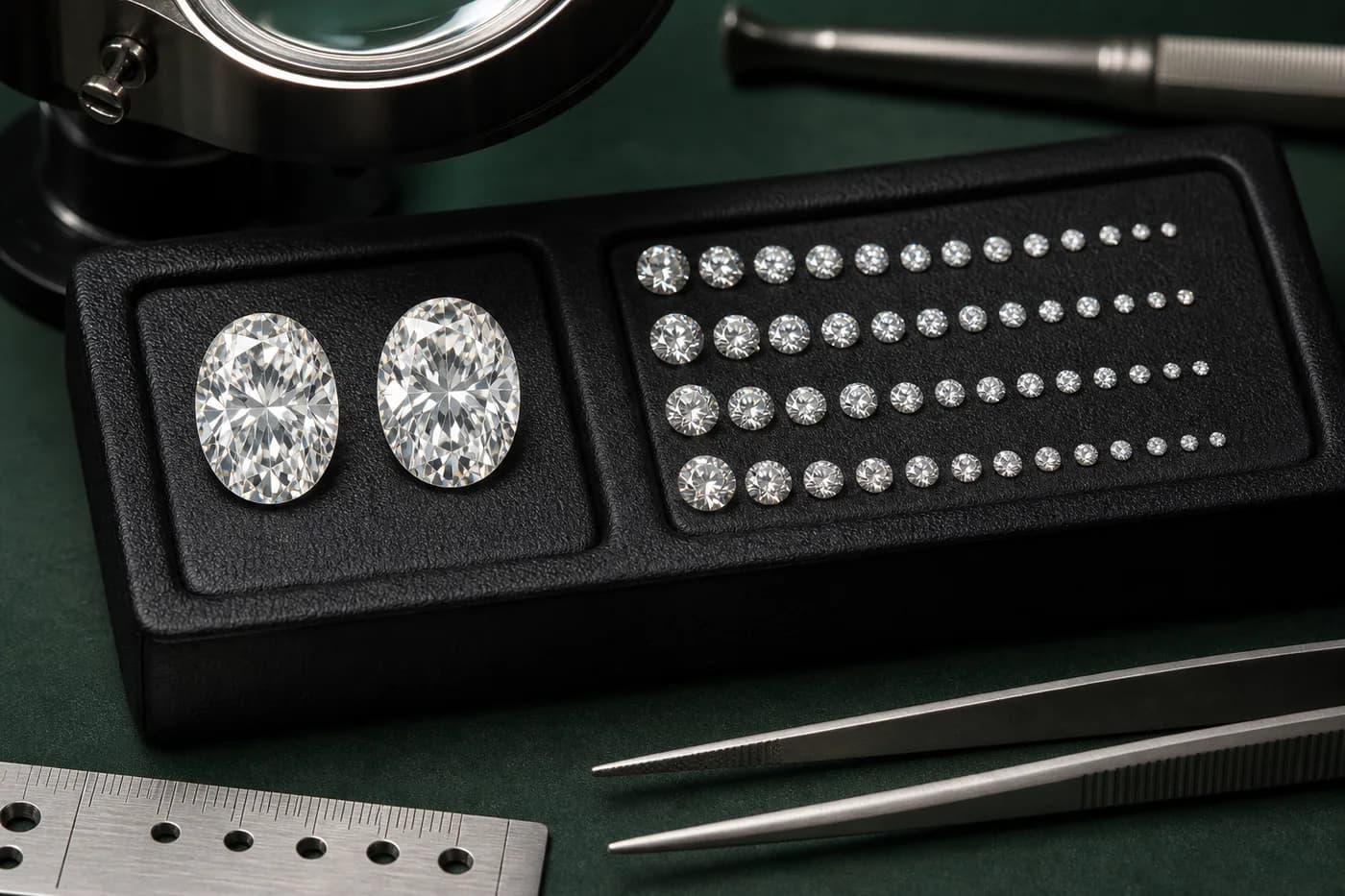
Matching depends on the jewelry use
Stud earrings usually prioritize balanced face-up size and visual appearance. Side stones require a deliberate relationship to the center and setting. Two-stone jewelry may require complementary rather than identical orientation. State the use before setting tolerances.
What to compare across a pair
Dimensions and ratio
Compare length, width, depth where relevant and face-up proportions.
Weight basis
State whether the target applies to each stone or to the combined pair.
Outline and facets
Review shoulder, corner or tip geometry and the face-up facet pattern.
Grading and appearance
Set color, clarity and visual-consistency requirements appropriate to the setting.
How to request a 1 carat lab-grown diamond matched pair
First state whether 1 carat means one carat total weight or one carat for each stone. Then provide shape, target dimensions, ratio, color, clarity, report preference, matching tolerance and intended setting. The RFQ requires a weight-basis selection to prevent an ambiguous quotation.
Pair specification checklist
Include shape, total-or-each weight basis, carat target, dimensions, ratio, outline, color, clarity, growth preference, report requirement, matching notes, setting use, quantity of pairs and destination.
Common matched-pair errors
Avoid relying on equal carat weight, accepting noticeably different face-up dimensions, omitting orientation, or assuming the same report grade creates the same visual appearance. Review both stones together whenever comparable media is available.
Related pair shapes
Buyer questions
Should matched pairs have identical carat weights?
Not necessarily. The required weight relationship depends on face-up dimensions, shape and setting. State the permitted weight and dimension tolerance in the brief.
Can different report numbers still form a pair?
Yes, if the stones meet the documented grading, dimensional and visual-matching requirements. Each report and stone still needs separate verification.