Oval Lab-Grown Diamonds for Wholesale Jewelry Buyers
Oval stones need a more visual sourcing brief than a simple carat and grading range. Outline, length-to-width ratio and the appearance of the bow-tie area can materially change how a stone works in a bridal or branded design.
Request oval options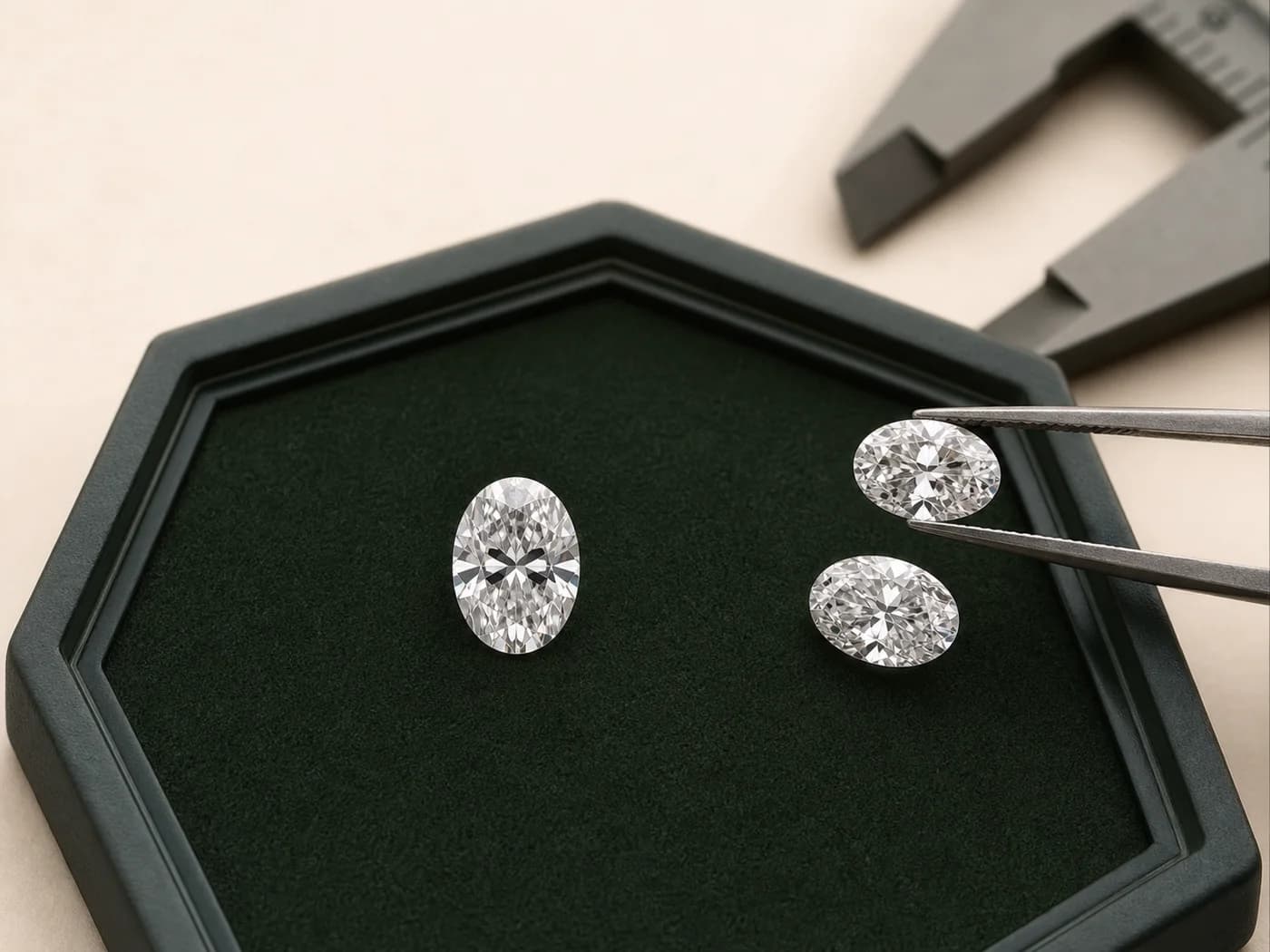
How to source a 2 carat oval lab-grown diamond wholesale
Treat 2 carat as a weight target, not as a fixed physical size. State the required length, width, length-to-width ratio, shoulder outline and acceptable bow-tie appearance. An IGI or GIA preference identifies the requested grading report, but the buyer should still compare the returned report, inscription when applicable, dimensions and face-up media with the proposed stone. Current price and availability are confirmed only for the quoted option.
Define the outline your design needs
An oval laboratory-grown diamond can appear elongated, balanced or broad even at a similar weight. Share a preferred length-to-width range or, better, the actual minimum and maximum dimensions that suit the setting. The outline should also be reviewed for shoulder shape and symmetry because these details influence the visual result and prong placement. If the design is based on an existing CAD or mounting, provide the center-stone seat information after first contact so unsuitable options can be removed early.
Use media to review the bow-tie area
The bow-tie effect is not fully described by a color or clarity grade. Request face-up video or comparable visual material when available and assess the dark or contrasting area across the center in the lighting provided. Media conditions vary, so the review should be treated as a sourcing aid rather than a guarantee that a stone looks identical in every environment. The final record should still connect the video, report information, dimensions and physical stone. A buyer can state the level of visible bow-tie that is acceptable for the intended price position and design.
Matching ovals requires clear tolerances
For earrings and side-stone pairs, match length, width, length-to-width relationship, outline, color, clarity and face-up appearance. Weight alone is not enough. If the ovals will sit on opposite sides of a center stone, include orientation and setting constraints. For a branded repeat style, document the acceptable range for each characteristic so later replenishment can be checked consistently. Availability, pricing and lead time remain quotation-specific because suitable visual matches may require comparison across more than one supply source.
Procurement checklist
Current oval availability
Source by specification
Send the target carat, millimeter dimensions, ratio, grading preferences, quantity and jewelry use for a current supply check. The response identifies options that match the brief without presenting an unverified public inventory claim.
Request Current AvailabilityOval sourcing questions
Can you guarantee no bow-tie in an oval?
No absolute visual guarantee is made from a text specification. State your tolerance and review available face-up media for each proposed stone.
What should be matched in oval earrings?
Length, width, ratio, outline, color, clarity, weight relationship and face-up appearance should be reviewed together.
Can I request a specific oval ratio?
Yes. Provide a target range and any mounting dimensions. Current options are checked against that brief.
Related shapes and sourcing services
Last updated: July 13, 2026