Emerald-Cut Lab-Grown Diamonds for Wholesale Buyers
Emerald cuts use broad step facets and an open visual structure. Buyers usually need to give extra attention to clarity placement, outline, ratio and the relationship between the report and face-up appearance.
Request emerald options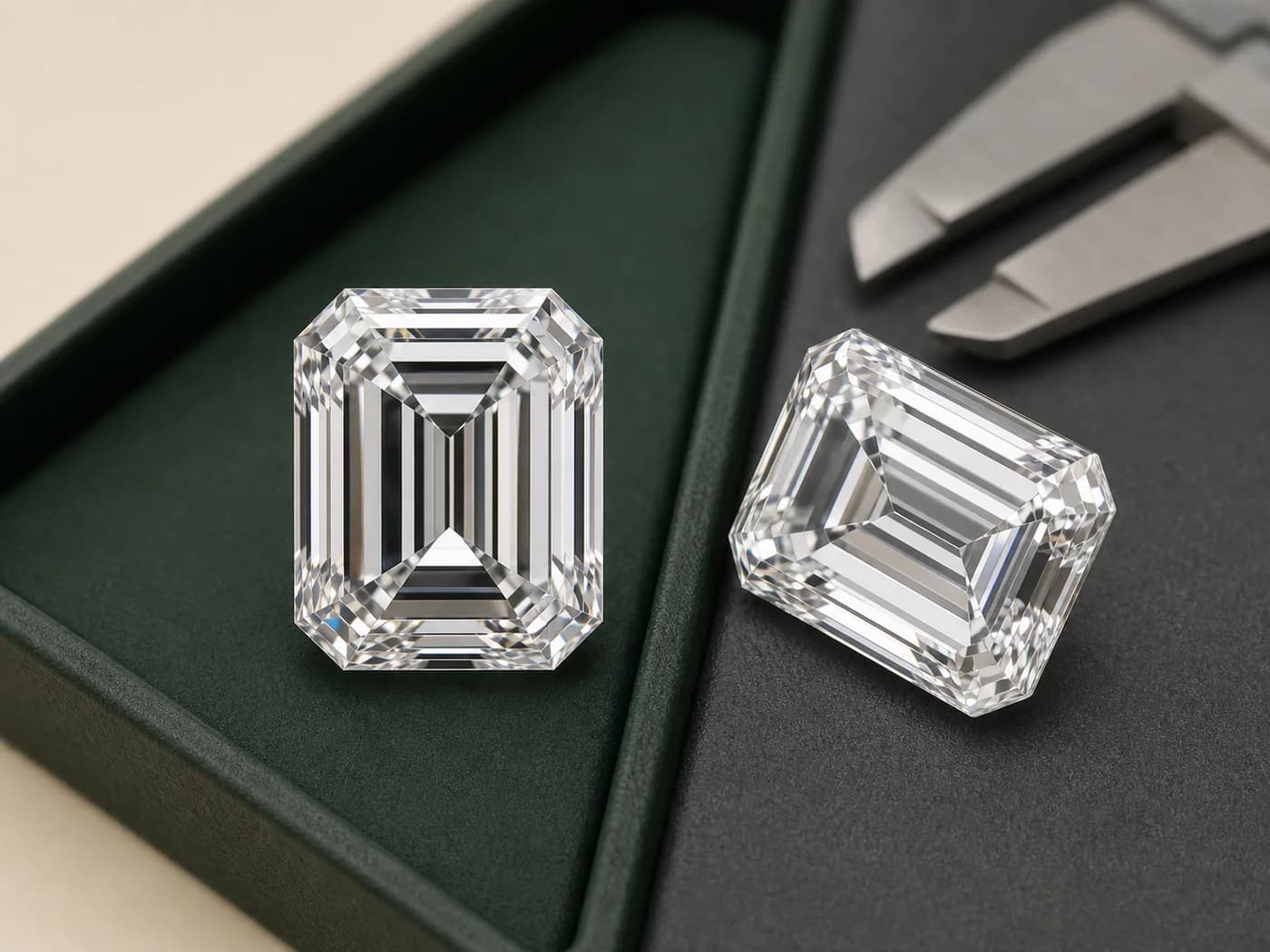
How to source a 3 carat emerald-cut lab-grown diamond
Use 3 carat as the weight target and define the face-up length and width, length-to-width ratio, corner profile and setting limits. Review the step-facet appearance for windowing, extinction and the visibility of clarity characteristics. The broad facets make inclusion position and transparency especially relevant. Compare the report and available media with the physical measurements before approval.
Start with dimensions and ratio
Emerald cut laboratory-grown diamonds can be square-leaning, classically rectangular or strongly elongated. A useful request specifies length and width boundaries, not only carat weight. The preferred ratio should reflect the setting, especially when corner placement, halo geometry or side-stone alignment is already defined. Cropped corners, outline symmetry and table appearance can influence how the stone fits and reads in the finished jewelry. If a CAD exists, it can be shared after the first contact so stone options are reviewed against practical setting dimensions.
Clarity needs a visual review
The broad facets of an emerald cut can make certain inclusions easier to notice than they would be in a brilliant-style cut. A clarity grade is useful, but the buyer should also review available face-up and angled media for inclusion position and overall transparency. The report, laser inscription when applicable, measurements, weight and physical item should be connected during verification. Growth method and disclosed treatment information should be recorded for the selected option. This process supports a better purchasing decision without claiming that video can reproduce every lighting condition.
Pairs and three-stone layouts need geometry control
Matched emerald cuts should be compared for length, width, ratio, corner shape, color, clarity, weight relationship and step pattern. In a three-stone ring, the side stones may need a deliberate proportion to the center rather than an equal match. State the layout, target visual spread and setting constraints in the sourcing request. For repeat collections, record acceptable dimension and ratio ranges so replenishment can be screened consistently. The quotation confirms current availability and does not assume an identical stone will remain available later.
Procurement checklist
Current emerald availability
Source by specification
Send the target carat, millimeter dimensions, ratio, grading preferences, quantity and jewelry use for a current supply check. The response identifies options that match the brief without presenting an unverified public inventory claim.
Request Current AvailabilityEmerald sourcing questions
Why provide measurements for emerald cuts?
Weight alone does not describe visual spread or setting fit. Length, width and ratio help screen useful options.
Is clarity more important for an emerald cut?
The open step-facet pattern can make some inclusions more visible, so report information and available media should be reviewed together.
Can emerald cuts be matched for side stones?
Yes. Include the target layout, dimension relationship, ratio, color, clarity and outline requirements.
Related shapes and sourcing services
Last updated: July 13, 2026